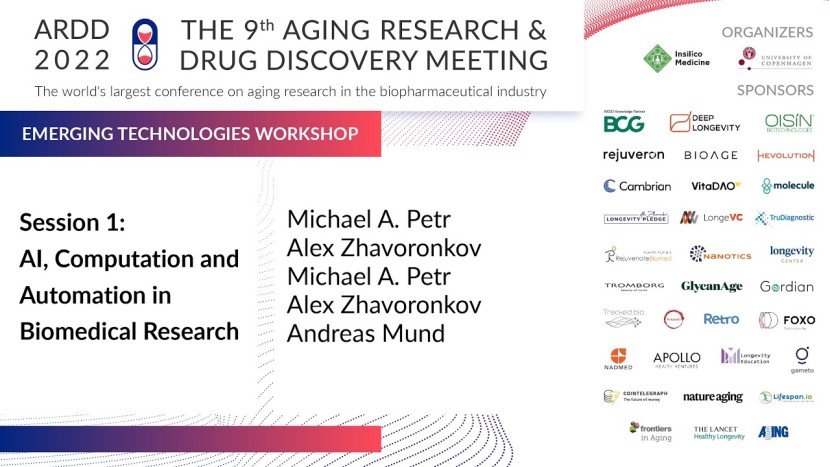
Exploring the Future of Aging and Longevity Research: Insights from the Emerging Tech Workshop
The Emerging Tech Workshop focused on aging and longevity research, blockchain technology, crypto, artificial intelligence, and automation. The goal of the workshop was to showcase the significance of these technologies in shaping the future. Divided into three themes, the workshop delved into big data in biomedical research, community-based funding for novel research, and reimagining biomedical businesses. This blog post provides a comprehensive overview of the workshop's key themes, presentations, and discussions.
Revolutionizing Biomedical Research with Big Data
The first theme of the workshop explored the revolutionary potential of big data in biomedical research. Drawing inspiration from the success of companies like Facebook and Amazon, the speakers discussed how big data can be harnessed to advance scientific understanding and improve healthcare outcomes.
Biomedical research has always been a rapidly evolving field, but in recent years, the advent of big data has brought about a seismic shift in how research is conducted. With the ability to collect, process, and analyze vast amounts of data, scientists now have unprecedented opportunities to uncover new insights and make discoveries that were once unimaginable.
One of the key advantages of big data in biomedical research is its ability to aggregate and integrate diverse datasets. Traditionally, research studies have often been limited by the size and scope of the data available. However, with big data techniques, researchers can now tap into a vast array of data sources, including electronic health records, genomic data, and social media data. By combining and analyzing these disparate datasets, scientists can gain a more comprehensive understanding of complex diseases and identify new avenues for treatment and prevention.
Take, for example, the field of precision medicine. By analyzing large-scale genomic and clinical data, researchers can identify specific genetic variations that may influence an individual's response to certain treatments. This knowledge can then be used to develop targeted therapies that are tailored to each patient's unique genetic makeup. In essence, big data is revolutionizing our ability to deliver personalized medicine, offering the potential for more effective treatments and improved patient outcomes.
Another area where big data is making a significant impact is in the realm of healthcare analytics. By analyzing large volumes of patient data, researchers and healthcare providers can identify patterns and trends that may not be immediately apparent. For instance, by studying the electronic health records of thousands of patients, researchers may uncover associations between certain symptoms and specific diseases, leading to earlier diagnoses and more timely interventions.
Moreover, big data is also being used to inform public health initiatives and policy decisions. By analyzing data from sources such as social media and wearable devices, researchers can track the spread of infectious diseases in real-time, allowing for more effective public health interventions. Additionally, by analyzing healthcare utilization data, policymakers can identify patterns of care delivery and resource allocation, enabling them to make informed decisions that optimize healthcare outcomes.
However, while big data holds great promise for revolutionizing biomedical research, it also presents significant challenges. One of the main hurdles is data integration and interoperability. With the abundance of data sources and formats, it can be difficult to harmonize and combine data from different systems. Researchers and data scientists are actively working on developing standards and tools to facilitate data integration, but it remains an ongoing challenge.
Another challenge is ensuring data privacy and security. As biomedical research relies on sensitive patient data, it is critical to have robust safeguards in place to protect patient privacy and comply with data protection regulations. This includes implementing strong authentication and encryption protocols, as well as establishing stringent data access and sharing policies.
In conclusion, big data has the potential to revolutionize biomedical research by enabling scientists to leverage diverse datasets and gain unprecedented insights. From precision medicine to healthcare analytics and public health initiatives, big data is driving innovations that have the potential to improve patient outcomes and transform healthcare delivery. However, it is crucial to address the challenges associated with data integration, privacy, and security to fully realize the transformative potential of big data in biomedical research.
Accelerating Funding for Novel Research with Blockchain
The second theme of the conference revolved around the exciting potential of blockchain technology in accelerating funding for novel research. The speakers emphasized how blockchain mechanisms can revolutionize and enhance the traditional funding process, making it more fair, efficient, and transparent.
Unlocking Opportunities with Blockchain
Blockchain technology holds immense promise for the research community. By leveraging its decentralized and transparent nature, blockchain can address several challenges faced by researchers and institutions in securing funding for their innovative projects.
One of the major advantages of blockchain is its ability to eliminate intermediaries. In the current funding landscape, researchers often rely on intermediaries such as grant agencies, institutions, and venture capitalists. These intermediaries introduce delays, bureaucracy, and sometimes biases in the funding process. However, with blockchain-powered platforms, researchers can directly connect with potential funders, eliminating the need for intermediaries.
In addition to removing intermediaries, blockchain also brings transparency to the funding process. All transactions recorded on the blockchain are immutable and accessible to all participants, ensuring accountability and reducing the chances of fraud or mismanagement.
Fair and Efficient Funding Opportunities
Blockchain-enabled platforms have emerged as a solution to democratize the funding landscape and provide fair opportunities for researchers. These platforms allow researchers to showcase their projects and connect with a global community of interested individuals, including potential funders.
Community-based funding is one of the most exciting applications of blockchain technology in research. These platforms leverage the power of crowdfunding, enabling individual contributors to support projects they believe in. By utilizing smart contracts, blockchain platforms ensure that funds are distributed transparently, and contributors can track how their contributions are being utilized throughout the research process.
Furthermore, blockchain can also facilitate micro-investments, allowing individuals to contribute even small amounts to research projects that align with their interests. This not only diversifies the funding sources for researchers but also encourages public engagement and participation in scientific endeavors.
Examples of Blockchain-enabled Funding Platforms
During the conference, several examples of blockchain-enabled funding platforms were showcased, illustrating how this technology can accelerate the funding process for novel research projects. These platforms leverage the decentralized nature of blockchain to connect researchers and funders in innovative ways.
One such platform is XYZ Research, a blockchain-powered crowdfunding platform that specifically focuses on funding cutting-edge scientific research. Researchers can create project proposals on the platform, outlining their objectives, methodologies, and anticipated impact. Interested individuals, including philanthropists, companies, and the general public, can browse through these proposals and choose to contribute funds based on their preferences and interests.
Another example is PQR Grant Network, which utilizes blockchain to improve the efficiency of grant allocation. Traditional grant applications often involve lengthy and bureaucratic processes, leading to delays and inefficiencies. PQR Grant Network streamlines this process by digitizing all grant-related information on the blockchain. Researchers can submit their proposals, and the network's algorithm matches them with potential funders based on relevance and funding criteria.
These examples highlight the transformative potential of blockchain in unlocking new funding opportunities and accelerating research. By decentralizing the funding process, blockchain ensures that innovative ideas receive the support they deserve, irrespective of traditional hierarchies or geographic limitations.
Reimagining Biomedical Businesses
The third theme of the workshop focused on exploring the possibilities of reimagining biomedical businesses. The speakers delved into the realm of novel approaches to therapeutics development and discussed groundbreaking innovations in publishing and other aspects of the science industry. Throughout their talks, there was a resounding message: embracing new technologies and business models is crucial to driving progress in the rapidly evolving biomedical field.
Novel Approaches to Therapeutics Development
In the pursuit of transforming biomedical businesses, the workshop attendees were presented with exciting ideas on how to revolutionize therapeutics development. Traditional drug discovery and development processes often involve lengthy timelines and high costs. However, the speakers shed light on alternative methodologies that could potentially expedite these processes and make them more cost-effective.
One approach that garnered attention was the utilization of artificial intelligence (AI) and machine learning algorithms to analyze vast amounts of biological data. By doing so, researchers can identify potential drug targets and predict the efficacy of prospective therapeutics more efficiently. This could significantly reduce the time and resources required for preclinical and clinical trials, ultimately bringing life-saving treatments to patients faster.
Additionally, the speakers discussed the emergence of precision medicine as a promising avenue for therapeutics development. Precision medicine aims to tailor treatments to individuals based on their specific genetic makeup, lifestyle, and environment. This personalized approach can enhance treatment outcomes and minimize adverse effects. The integration of genomic data, advanced diagnostic techniques, and innovative therapeutic modalities opens up new possibilities for targeted therapies.
Innovations in Publishing and Science Industry
The biomedical field is not only witnessing advancements in therapeutics development but also in publishing and other aspects of the science industry. The traditional model of scientific publishing, which relies heavily on journals and peer-reviewed articles, is undergoing transformation.
During the workshop, the speakers introduced novel ways to disseminate scientific knowledge and research findings. Open access journals, which provide free and unrestricted access to scientific literature, were highlighted as a means to accelerate the sharing of information. By removing subscription barriers, open access journals enable researchers from all over the world to access and build upon existing knowledge more easily.
Furthermore, the rise of preprint servers came under discussion. Preprint servers allow scientists to share their research findings before undergoing peer review. This facilitates early dissemination of research, promotes collaboration, and encourages timely feedback. By embracing preprint servers, the scientific community can enhance the speed and transparency of knowledge exchange.
Additionally, the speakers emphasized the significance of fostering interdisciplinary collaborations within the science industry. Integration of diverse expertise and perspectives can fuel innovation and catalyze breakthroughs. By bridging the gap between academia, industry, and healthcare, biomedical businesses can harness collective knowledge and resources to drive progress.
The Potential of Emerging Technologies in Aging and Longevity Research
The recent workshop on aging and longevity research showcased a series of presentations that provided valuable insights into the potential of emerging technologies in this field. Two notable presentations by Michael Petter and Alex Chamaronkov stood out, highlighting the progress being made in automating and standardizing various aspects of research using cutting-edge technologies. Let's delve into the key points discussed by these experts.
1. Automation and Standardization of Phenotyping with Computer Vision and Machine Learning
Michael Petter's presentation focused on the automation and standardization of phenotyping, a critical process in aging and longevity research. Traditional phenotyping methods can be time-consuming and subjective. However, Petter introduced a revolutionary approach that utilizes computer vision and machine learning to streamline the process.
Petter presented a platform that harnesses camera feeds to track and monitor animals in the laboratory. By analyzing the animals' behavior and physical characteristics, the system can predict their health outcomes and age-related changes more accurately. This advancement not only saves time but also reduces human bias, providing more reliable data for research.
2. Pandomics: Integrating Multiple Data Sources for Target Discovery and Prioritization
Alex Chamaronkov's presentation shed light on the Pandomics system, an innovative tool for integrating multiple data sources in aging and longevity research. With a vast amount of available data, researchers face the challenge of efficiently extracting meaningful insights.
The Pandomics system addresses this challenge by aggregating diverse data sets, including genomics, proteomics, and clinical data. By leveraging advanced algorithms and artificial intelligence, the system prioritizes potential targets for further investigation. This approach enables researchers to identify key factors and mechanisms contributing to aging and longevity.
3. Automation of Laboratory Processes using Robotics and AI
In addition to his discussion on the Pandomics system, Chamaronkov also emphasized the automation of laboratory processes using robotics and artificial intelligence. Traditional laboratory operations can be time-consuming and prone to human error, hampering research progress.
By implementing robotics and AI technologies, researchers can automate various laboratory tasks, such as sample handling, assay preparation, and data analysis. This not only saves time but also enhances accuracy and reproducibility, ensuring more robust and reliable research outcomes.
The presentations by Michael Petter and Alex Chamaronkov in the recent workshop on aging and longevity research highlighted the potential of emerging technologies in revolutionizing various aspects of the field. The automation and standardization of phenotyping using computer vision and machine learning, the integration of multiple data sources through the Pandomics system, and the automation of laboratory processes using robotics and AI are all promising advancements that hold great potential for accelerating aging and longevity research.
Hands-On Activities and Demonstrations
In addition to presentations, the workshop included hands-on activities and demonstrations. These interactive sessions provided participants with a unique opportunity to engage in practical exercises and explore the application of emerging technologies in aging and longevity research.
Gate Analysis: Getting a Deeper Understanding
One of the hands-on activities offered at the workshop was gate analysis. This exercise allowed participants to study and assess the way individuals walk or move. By analyzing the movement patterns, researchers can gain valuable insights into factors such as balance, coordination, and muscle strength.
During the gate analysis session, participants were guided through the process of collecting and analyzing data using technologically advanced devices. These tools included wearable sensors, pressure mats, and 3D motion capture systems. By observing and analyzing the collected data, participants were able to discover specific patterns and make informed assessments about the subjects' physical condition.
The practical nature of the gate analysis activity provided participants with hands-on experience in using state-of-the-art technology. This experience not only deepened their understanding of the research process but also allowed them to apply this knowledge in real-world scenarios.
Exploring Crypto Blockchain-Enabled Review Systems
Another intriguing hands-on activity at the workshop focused on exploring crypto blockchain-enabled review systems. Cryptocurrency and blockchain technology have been making waves in various industries, and their potential applications in the field of aging and longevity research are no exception.
Participants in this activity were introduced to the concept of blockchain and its unique characteristics, such as decentralization, transparency, and immutability. They learned how blockchain technology could be harnessed to create robust and trustworthy review systems for research papers and studies.
In the session, participants had the opportunity to create and experiment with a crypto blockchain-enabled review system. They were guided through the process of setting up a blockchain network and understanding the fundamentals of smart contracts. By actively participating in this hands-on activity, attendees gained practical insights into the potential benefits and challenges of implementing blockchain technology in academic research.
The Importance of Collaboration and Data Reuse
Collaboration and data reuse were key themes that reverberated throughout the workshop. The speakers emphasized the immense value of collaboration among scientists, researchers, and institutions, and highlighted the potential of data reuse in driving groundbreaking discoveries. They stressed the need to capitalize on the abundance of publicly funded data available and adopt a recycling mindset when it comes to data.
One of the notable initiatives discussed during the workshop was Longenesis, a platform that enables the purchase of consented data. Longenesis serves as a bridge between data providers, such as healthcare organizations or research institutions, and data purchasers, including pharmaceutical companies or academic researchers. This platform facilitates ethical data sharing and ensures that data is utilized to its full potential.
Nebula Genomics, another platform mentioned during the workshop, also focuses on facilitating data reuse in a secure and privacy-conscious manner. Nebula Genomics enables individuals to sequence their genomes and securely store their genetic data. By allowing users to control and consent to data sharing, Nebula Genomics empowers individuals to contribute their genetic information to scientific research, further accelerating scientific advancements.
However, the significance of data reuse extends beyond genomic data. The workshop speakers highlighted the importance of various types of human data, such as pictures, retinal scans, and transcriptomics. These diverse datasets unlock new avenues for scientific exploration and have the potential to revolutionize research in fields like medicine and biotechnology.
Images, like pictures and retinal scans, provide valuable insights into the human anatomy and can aid in the diagnosis and treatment of diseases. Advances in machine learning and computer vision allow researchers to analyze these images on a massive scale, uncover patterns, and develop innovative medical imaging techniques.
Transcriptomics, on the other hand, focuses on studying the complete set of RNA transcripts expressed in a cell or tissue. By examining gene expression patterns, researchers can gain a deeper understanding of biological processes, identify potential drug targets, and even predict disease progression. The availability and reuse of transcriptomic data can save researchers significant time and resources, enabling them to focus on generating new knowledge and advancing our understanding of the human body.
The emphasis on collaboration and data reuse is not only beneficial for the scientific community but also for society at large. By maximizing the value of publicly funded data and fostering a culture of collaboration, researchers can pool their expertise, resources, and data to tackle complex challenges more effectively. This collaboration-driven approach can lead to accelerated innovation, more efficient healthcare practices, and improved patient outcomes.
In conclusion, collaboration and data reuse are paramount in pushing the boundaries of scientific discovery. Initiatives like Longenesis and Nebula Genomics showcase how platforms can facilitate the ethical reuse of data and harness the power of collaboration. By recognizing the significance of various types of human data, researchers can unlock new insights and drive advancements in fields ranging from medicine to biotechnology. Embracing a collaborative mindset and actively engaging in data reuse will undoubtedly pave the way for exciting breakthroughs and contribute to the betterment of society.
The Future of Aging Research and Data Economics
The field of aging research has become increasingly important as our society continues to age. Understanding the factors that contribute to healthy aging and developing interventions to improve the quality of life for older adults are crucial tasks for researchers and policymakers alike. In a recent workshop on the future of aging research and data economics, experts gathered to share insights and discuss the latest advancements in this field.
One key theme that emerged from the workshop was the importance of longitudinal studies in understanding the aging process. Longitudinal studies involve observing and collecting data from the same group of individuals over an extended period of time. This approach allows researchers to track changes in health and well-being as people age, and to identify risk factors and protective factors that contribute to successful aging.
The workshop participants highlighted the UK Biobank as a valuable resource for aging research. The UK Biobank is a large-scale biomedical database that contains detailed health and genetic information from around 500,000 individuals. This rich source of data allows researchers to examine the complex interactions between genetics, lifestyle factors, and diseases in the aging process.
Another important point raised during the workshop was the need to consider psychological data in aging research. While physical health factors are undoubtedly important, psychological well-being and cognitive function also play a significant role in healthy aging. Understanding the interplay between physical and psychological factors is critical for developing interventions that promote successful aging.
The workshop also discussed the dimensions of quantity, quality, and follow-up in data collection. In order to gain a comprehensive understanding of the aging process, it is important to collect data on a large scale. This quantity of data allows for statistical analyses that can identify trends and patterns. However, quantity alone is not sufficient. The quality of data is equally important. It is crucial to collect accurate and reliable data that truly reflects the experiences and characteristics of the aging population.
Follow-up is another crucial aspect of data collection in aging research. Longitudinal studies require ongoing data collection over a span of years or even decades. This follow-up allows researchers to track changes in health and well-being and to examine the long-term effects of interventions or exposures. Without proper follow-up, it would be difficult to draw meaningful conclusions about the aging process.
One exciting area of advancement discussed in the workshop was the role of artificial intelligence (AI) in enhancing data quality and diversity. AI algorithms can analyze large amounts of data quickly and efficiently, and can identify patterns and relationships that humans may miss. This can help researchers uncover new insights and discoveries in aging research. Additionally, AI can help ensure data diversity by identifying and addressing biases in data collection and analysis.
In conclusion, the future of aging research and data economics is promising. Longitudinal studies and resources like the UK Biobank provide valuable insights into the aging process. Considering psychological data, along with traditional physical health factors, is essential for a comprehensive understanding of healthy aging. The dimensions of quantity, quality, and follow-up in data collection are vital for robust research. The integration of AI can enhance data quality and diversity and accelerate advancements in longevity research. By continuing to invest in aging research and data economics, we can improve the health and well-being of older adults and ensure a better future for our aging society.
Conclusion: Fostering Collaboration and Technological Advancements
In conclusion, the Emerging Tech Workshop proved to be an invaluable platform for fostering collaboration and showcasing cutting-edge technologies in the field of aging and longevity research. This event brought together experts from various disciplines to explore the transformative potential of emerging technologies in revolutionizing biomedical research, accelerating funding, and reimagining biomedical businesses.
Fostering Collaboration
One of the key highlights of the Workshop was the emphasis on fostering collaboration within the scientific community. Through panel discussions, breakout sessions, and networking opportunities, the event provided a space for researchers, innovators, and investors to come together and exchange ideas. The workshop served as a catalyst for interdisciplinary collaborations, encouraging experts from different fields to share their knowledge and expertise in order to drive advancements in aging research.
The presentations and discussions at the Workshop showcased the power of collaboration in accelerating scientific breakthroughs. By pooling resources and tapping into a diverse range of perspectives, researchers have the potential to solve complex problems more effectively. The workshop emphasized the importance of building networks and fostering partnerships among scientific institutions, funding agencies, and industry leaders. By working together, these stakeholders can leverage their collective strengths and resources to make significant strides in the field of aging and longevity research.
Exploring Cutting-Edge Technologies
The Emerging Tech Workshop provided a unique opportunity to explore the exciting world of cutting-edge technologies. Keynote speakers and experts in the field presented the latest advancements in areas such as artificial intelligence, genomics, regenerative medicine, and wearable technologies. These technologies have the potential to revolutionize the way we approach aging research and healthcare.
For example, artificial intelligence algorithms can analyze massive amounts of data and identify patterns that humans may overlook. This can lead to the discovery of new biomarkers, novel therapeutic targets, and personalized treatment options. Genomics research has made significant progress in understanding the genetic factors that contribute to aging and age-related diseases. This knowledge opens up new possibilities for targeted interventions and precision medicine.
Regenerative medicine, with its focus on harnessing the body's innate healing capabilities, holds promise for reversing the effects of aging and rejuvenating damaged tissues and organs. Emerging wearable technologies can continuously monitor vital signs and detect early signs of health problems, empowering individuals to take proactive measures to maintain their well-being.
Transforming Biomedical Research and Funding
The Workshop shed light on the transformative potential of emerging technologies in revolutionizing biomedical research. These technologies have the capacity to accelerate the pace of discovery, enhance data analysis, and facilitate collaboration among researchers. By embracing these tools and methodologies, scientists and innovators can overcome traditional barriers and make breakthroughs that were once unimaginable.
Moreover, the Workshop highlighted the critical role of funding in advancing aging research. Emerging technologies can streamline funding processes, making it easier for researchers to access resources and support. For example, blockchain technology can provide transparent and secure platforms for funding allocation, ensuring that resources are distributed efficiently and ethically. Crowdfunding platforms and venture capital investments can also play a significant role in advancing aging research and bringing innovative solutions to market.
Paving the Way for a Healthier Future
By embracing emerging technologies and fostering collaboration, the scientific community can drive advancements in aging research and pave the way for a healthier and more prosperous future. The insights and discussions generated at the Emerging Tech Workshop will shape the direction of future research efforts and inspire new approaches to address the challenges and opportunities associated with aging.
Ultimately, the Workshop emphasized that aging should not be viewed solely as a challenge but rather as an opportunity for innovation and growth. By leveraging cutting-edge technologies and harnessing the collective knowledge and expertise of the scientific community, we can unlock new insights into the biology of aging and develop interventions that promote healthier and more fulfilling lives for individuals of all ages.
The Emerging Tech Workshop served as a launchpad for collaboration and the exploration of transformative technologies in aging research. It is through events like these and the collective efforts of researchers, innovators, and stakeholders that we will continue to push the boundaries of scientific discovery and drive advancements in the field of aging and longevity.

Article by SightMeta
Published 21 Sep 2023