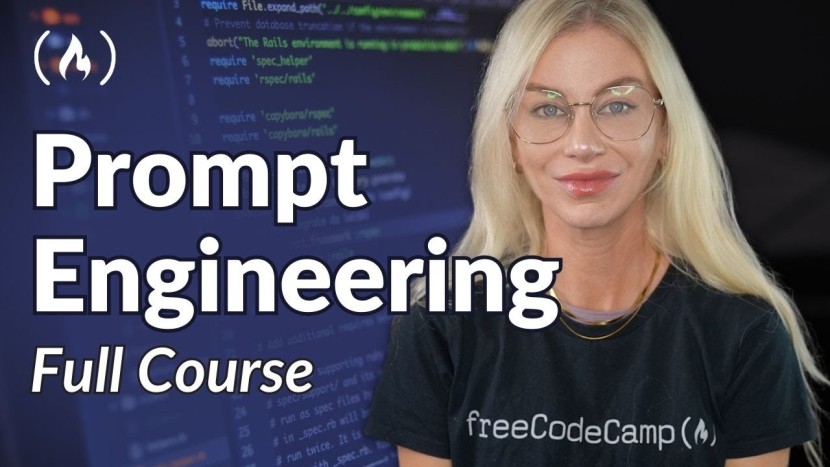
The Art of Prompt Engineering: Enhancing Human-AI Interaction
In the world of artificial intelligence, prompt engineering plays a crucial role in refining and optimizing the interaction between humans and AI systems. This specialized field combines linguistics, standardized language structures, and an understanding of AI models to craft effective prompts that yield accurate and meaningful responses. In this blog post, we will explore the key concepts and techniques involved in prompt engineering and how they contribute to improving the capabilities of AI language models.
Understanding AI and Prompt Engineering
When it comes to the world of artificial intelligence (AI),prompt engineering plays a crucial role in enhancing the capabilities of AI models, particularly language models like GPT-4. To truly grasp the significance of prompt engineering, it is essential to have a clear understanding of AI and its subsets, such as machine learning.
What is AI?
AI, or artificial intelligence, is the field of computer science that focuses on the development of intelligent machines capable of simulating human intelligence processes. These machines are programmed to perform tasks that would typically require human intelligence, such as speech recognition, decision-making, problem-solving, and learning.
At its core, AI aims to create systems that can perceive their environment, reason and learn from data, and take appropriate actions to achieve specific goals. This simulation of human intelligence can be achieved through various AI techniques, including machine learning, natural language processing, computer vision, and robotics.
The Role of Machine Learning in AI
Machine learning is a subset of AI that focuses on the development of algorithms and statistical models that enable machines to learn and make predictions from data. Instead of being explicitly programmed, machine learning models are trained using large datasets, allowing them to analyze patterns and make decisions or predictions based on the data.
The training process involves feeding the machine learning model with labeled data, also known as training data. The model learns from this data and builds a mathematical representation of the patterns and relationships within it. Once trained, the model can make predictions or classify new, unseen data.
Machine learning techniques can be broadly categorized into three types:
- Supervised Learning: In supervised learning, the model is trained using labeled data, where the input data is accompanied by the correct output or target variable. The model learns to predict the correct output by generalizing from the labeled examples.
- Unsupervised Learning: Unsupervised learning involves training the model with unlabeled data, where the model discovers patterns and relationships on its own without any predefined labels. Clustering and dimensionality reduction are common tasks in unsupervised learning.
- Reinforcement Learning: Reinforcement learning uses a reward-based system to train the model. The model learns through trial and error, receiving positive or negative feedback based on its actions, and adjusts its strategy to maximize the rewards.
Understanding Prompt Engineering
Now that we have a basic understanding of AI and machine learning, let's dive into the concept of prompt engineering. Prompt engineering focuses on optimizing the prompts given to AI models, particularly language models like GPT-4, to enhance their text generation abilities.
In the context of language models, a prompt can be thought of as the initial input provided to the model, based on which it generates the desired text. The quality and specificity of the prompt play a pivotal role in determining the output generated by the model. By carefully crafting and refining the prompts, AI researchers and developers can influence the output of the model to align with their desired goals.
Prompt engineering involves techniques such as adding instructions or constraints, modifying or rephrasing prompts, specifying the format or structure of the desired output, and using alternative decoding strategies. These techniques help guide the language model's generation process and produce more accurate, coherent, and contextually appropriate text.
Effective prompt engineering requires a deep understanding of the underlying AI model, its capabilities, and limitations. It involves iterative experimentation and fine-tuning to achieve the desired output quality. With language models like GPT-4, prompts can have a significant impact on the model's responses, making prompt engineering a crucial aspect of AI development.
Enhancing Text Generation Abilities
By optimizing prompts through prompt engineering, AI developers can enhance the text generation abilities of language models like GPT-4. These models can generate human-like text and are often used for various applications, including content generation, chatbots, customer support systems, and creative writing assistance.
Prompt engineering allows developers to guide the language model's output in terms of style, tone, context, and even specific facts or details. For instance, in a creative writing application, a prompt can be tailored to produce a story with specific characters, settings, or plots. Similarly, in a customer support system, prompts can be designed to generate contextually appropriate responses based on specific customer queries or issues.
This level of control and customization through prompt engineering enables AI models to provide more accurate and relevant information to users. It helps in reducing biases, improving coherence, and generating outputs that align with user expectations.
Crafting Effective Prompts
Writing good prompts requires a combination of linguistic knowledge and an understanding of standardized language structures. Whether you are instructing a human or an AI model, clear and concise instructions play a vital role in eliciting the desired response. In this blog post, we will explore the key elements involved in crafting effective prompts.
1. Clear Instructions
When creating prompts, it is important to provide clear and unambiguous instructions. A well-defined prompt leaves no room for confusion and helps both humans and AI models understand what is expected of them. Consider the following example:
"Write a summary of the given article in 100 words."
In this prompt, the instruction to write a summary and the word limit of 100 words are explicitly mentioned. Such clarity enables the AI model to focus on generating a concise summary, resulting in accurate and contextually appropriate responses.
2. Adopting a Persona
To make prompts more engaging and relatable, it can be beneficial to adopt a persona. By framing the prompts as if they are coming from a specific character or role, you can provide context and set the tone for the expected response. For example:
"You are a travel blogger exploring a new city. Write a blog post about your favorite hidden gems with at least three recommendations."
In this prompt, the persona of a travel blogger adds an element of storytelling and allows the AI model to generate responses that align with the given context. It also helps in eliciting a more detailed and informative response by specifying the desired number of recommendations.
3. Specifying the Desired Format
When crafting prompts, specifying the desired format can greatly enhance the quality of responses. By providing guidelines on how the response should be structured, you can ensure that the generated content is organized and cohesive. Consider the following prompt:
"In bullet points, list three advantages and three disadvantages of renewable energy."
In this prompt, the use of bullet points clearly indicates the desired format for the response. This not only makes it easier for the AI model to generate the content but also makes it more readable for the human readers.
Zero-Shot and Few-Shot Prompting
Prompt engineering is a critical aspect of fine-tuning AI models and improving their performance. By leveraging two key techniques, zero-shot prompting and few-shot prompting, prompt engineers can enhance the capabilities of pre-trained models without the need for extensive retraining.
Zero-Shot Prompting
Zero-shot prompting is a technique that utilizes a pre-trained model's understanding of words and concept relationships without further training. This means that the model can comprehend prompts and generate responses without specifically being trained on that prompt. It has the advantage of leveraging the general knowledge and context learned by the model during its pre-training phase.
For example, let's consider a language model that has been pre-trained on a vast corpus of text. If we provide a prompt such as "Translate the following sentence into French: 'Hello, how are you?'," the model can generate the correct translation even without prior training on translation tasks. It can understand word meanings and grammatical structures to produce accurate results.
Zero-shot prompting is particularly valuable in scenarios where training data for a specific prompt may be limited or non-existent. By leveraging the model's pre-existing knowledge, prompt engineers can fine-tune the model for various tasks without the need for additional training data or computational resources.
Few-Shot Prompting
Few-shot prompting is another powerful technique used by prompt engineers that enhances a model's performance by providing training examples via the prompt itself. Unlike traditional approaches that require extensive retraining on large datasets, few-shot prompting enables prompt engineers to augment the model's understanding with just a few additional examples.
By providing specific training examples within the prompt, prompt engineers can guide the model towards the expected behavior or response. The model can then learn from these examples and generalize to similar tasks or prompts. This technique significantly reduces the computational overhead associated with retraining models from scratch.
For instance, imagine a chatbot model that has been trained on a large dataset of customer service interactions. However, it needs to be fine-tuned for specific product-related queries. Instead of retraining the entire model on a new dataset, prompt engineers can provide a few-shot prompt such as "Answer the following product-related question: 'Can you recommend a budget-friendly smartphone with a good camera?'" The model can then learn from this example and generate appropriate responses for similar queries.
Advantages of Prompt Engineering
By leveraging zero-shot and few-shot prompting, prompt engineers can unlock several advantages:
- Efficiency: Prompt engineering allows AI models to be fine-tuned without the need for extensive retraining or gathering large amounts of new training data. This significantly reduces computational overhead.
- Generalization: Zero-shot prompting enables models to understand prompts even without specific training. This allows them to generalize knowledge across tasks and domains.
- Flexibility: Few-shot prompting provides a flexible approach for enhancing models. By specifying relevant examples within the prompt, prompt engineers can guide models to learn specific tasks or behaviors without retraining the entire model.
- Scalability: Prompt engineering techniques can be applied to various pre-trained models and across different NLP tasks. This makes them highly scalable and applicable to a wide range of use cases.
Overall, prompt engineering and the use of techniques like zero-shot and few-shot prompting open up new avenues for fine-tuning AI models, improving their performance, and addressing specific task requirements. By tapping into the existing knowledge of pre-trained models and providing additional guidance through prompts, prompt engineers can achieve remarkable results with minimal computational overhead.
Challenges and Considerations
While prompt engineering offers immense potential, it also comes with challenges. AI hallucinations refer to unusual outputs that AI models can produce when they misinterpret data. Prompt engineers must be aware of such risks and take precautions to mitigate them.
A significant concern in prompt engineering is AI hallucinations. These are the unexpected and often bizarre results that AI models may generate due to misinterpreting data. The potential for AI hallucinations arises from the fact that AI models are trained on vast amounts of data, and if the input data is biased, incomplete, or poorly labeled, the resulting prompts may produce misleading or incorrect information.
To address this challenge, prompt engineers must exercise caution when designing and developing prompts. It is crucial to thoroughly review and analyze the input data to identify any potential biases, inaccuracies, or ambiguities. By identifying and addressing these issues upfront, prompt engineers can greatly reduce the risk of AI hallucinations.
Another consideration in prompt engineering is the use of techniques like text embeddings and vectors. These techniques play a crucial role in representing textual information in a format that can be easily processed by algorithms. Text embeddings are mathematical representations of words or phrases that capture their semantic meaning. They enable prompt engineers to analyze and manipulate text effectively.
Text embeddings capture the relationships between words or concepts and represent them in a continuous vector space. This representation allows algorithms to perform various natural language processing tasks, such as similarity analysis, sentiment analysis, and language translation. Prompt engineers rely on these techniques to transform raw text data into a structured and meaningful format that can be used by AI models effectively.
When working with text embeddings and vectors, prompt engineers need to consider the underlying algorithms and their limitations. Different embedding models may produce different results, and prompt engineers should select the most appropriate model based on their specific requirements and the nature of the data they are working with.
Additionally, prompt engineers should be mindful of the computational and memory requirements that come with using text embeddings and vectors. These techniques typically involve large amounts of data, and processing such data can be resource-intensive. Prompt engineers may need to optimize their algorithms or consider using distributed computing techniques to handle the computational demands.
In conclusion, prompt engineering offers immense potential for AI systems. However, prompt engineers must be aware of the challenges associated with it. AI hallucinations can occur when AI models misinterpret data, leading to unusual outputs. To mitigate this risk, prompt engineers should carefully review and analyze the input data and take steps to address any biases or inaccuracies. Additionally, techniques like text embeddings and vectors are essential for representing textual information in a format suitable for AI models. Prompt engineers should be aware of the underlying algorithms and their limitations and consider the computational requirements associated with these techniques. With proper considerations and precautions, prompt engineers can harness the power of prompt engineering to build robust and effective AI systems.
Prompt Engineering: Bridging the Gap Between Humans and AI Systems
Prompt engineering is a truly fascinating field that serves as a bridge between humans and AI systems. By refining and optimizing prompts, prompt engineers can significantly enhance the interaction and output quality of AI language models. This process requires a deep understanding of linguistics, standardized language structures, and cutting-edge techniques like zero-shot and few-shot prompting. Prompt engineering is shaping the future of human-AI collaboration, and as AI continues to evolve, it will play an increasingly vital role in unlocking the full potential of AI systems.
Enhancing Interaction and Output Quality
One of the key goals of prompt engineering is to improve the interaction between humans and AI language models. Prompt engineers work on developing prompts that effectively communicate with the AI system, enabling more accurate and relevant responses. By understanding the nuances of language and using standardized structures, prompt engineers can craft prompts that elicit desired responses from AI models.
Moreover, prompt optimization techniques play a crucial role in improving the output quality of AI language models. By carefully selecting and crafting prompts, prompt engineers can guide the AI system to generate more coherent, factual, and contextually appropriate responses. This optimization process involves iterative experimentation and fine-tuning to achieve the desired results.
The Role of Linguistics in Prompt Engineering
Linguistics forms the foundation of prompt engineering. As language is complex and context-dependent, prompt engineers must have a comprehensive understanding of linguistic principles. This knowledge enables them to create prompts that effectively convey the desired meaning and context. By leveraging linguistic concepts such as syntax, semantics, and pragmatics, prompt engineers can optimize prompts to elicit accurate and meaningful responses from AI language models.
Additionally, prompt engineers need to be aware of common linguistic pitfalls and biases. They must carefully consider the potential limitations and biases in AI language models and work towards mitigating them through prompt engineering. This involves employing techniques like debiasing prompts and ensuring the generation of unbiased and fair responses.
Standardized Language Structures and Zero/Few-Shot Prompting
Prompt engineers rely on standardized language structures to effectively communicate with AI systems. These structures ensure consistency in prompts and make it easier for AI models to process and generate responses. By adhering to established language patterns, prompt engineers enhance the predictability and reliability of AI language models.
Zero-shot and few-shot prompting techniques are important tools in prompt engineering. Zero-shot prompting allows AI models to perform tasks they were not explicitly trained on by providing high-level instructions in the prompts. This versatility enables AI systems to tackle a wide range of tasks, expanding their capabilities beyond what they were initially trained for.
Similarly, few-shot prompting enables AI models to learn new tasks with minimal training. Prompt engineers can design prompts that provide a small amount of task-specific information, allowing the AI system to generalize and adapt to new tasks quickly. This flexibility is highly valuable in scenarios where prompt engineers need to continuously update AI models with new information and tasks.
The Future of Human-AI Collaboration
As AI continues to advance, prompt engineering will become increasingly vital in harnessing the full potential of AI systems. Prompt engineers will play a key role in improving the usability, reliability, and effectiveness of AI models across various domains.
By refining prompts and continuously optimizing AI language models, prompt engineers will enable more natural and human-like interactions with AI systems. This will have far-reaching implications in fields such as customer service, virtual assistants, content generation, and more. The ability to fine-tune AI responses to meet specific needs and preferences will pave the way for new levels of human-AI collaboration and productivity.
Furthermore, prompt engineering will also contribute to addressing the ethical considerations surrounding AI systems. By designing prompts that promote fairness, neutrality, and transparency, prompt engineers can mitigate biases and ensure ethical use of AI technology.
Unlocking the Full Potential of AI Systems
Prompt engineering is an exciting and rapidly evolving field that holds immense potential for unlocking the full capabilities of AI systems. As prompt engineers continue to push the boundaries of what AI models can achieve, the possibilities for human-AI collaboration will expand. The future of prompt engineering lies in refining techniques, exploring new paradigms, and pushing for more inclusive and ethical AI systems.
With a deep understanding of linguistics, standardized language structures, and techniques like zero-shot and few-shot prompting, prompt engineers are at the forefront of shaping the future of AI. As AI technology advances, prompt engineering will play a critical role in ensuring that AI systems understand and respond to human needs effectively.
By refining and optimizing prompts, prompt engineers empower AI systems to deliver high-quality outputs, making them valuable tools across various industries. As the field of prompt engineering continues to evolve, it is exciting to imagine the limitless possibilities that AI holds for transforming human-AI collaboration and revolutionizing the way we interact with technology.

Article by SightMeta
Published 21 Sep 2023